
Caribbean Memories
Saturday Soup: The Weekend Rituals Every Caribbean Child Remembers
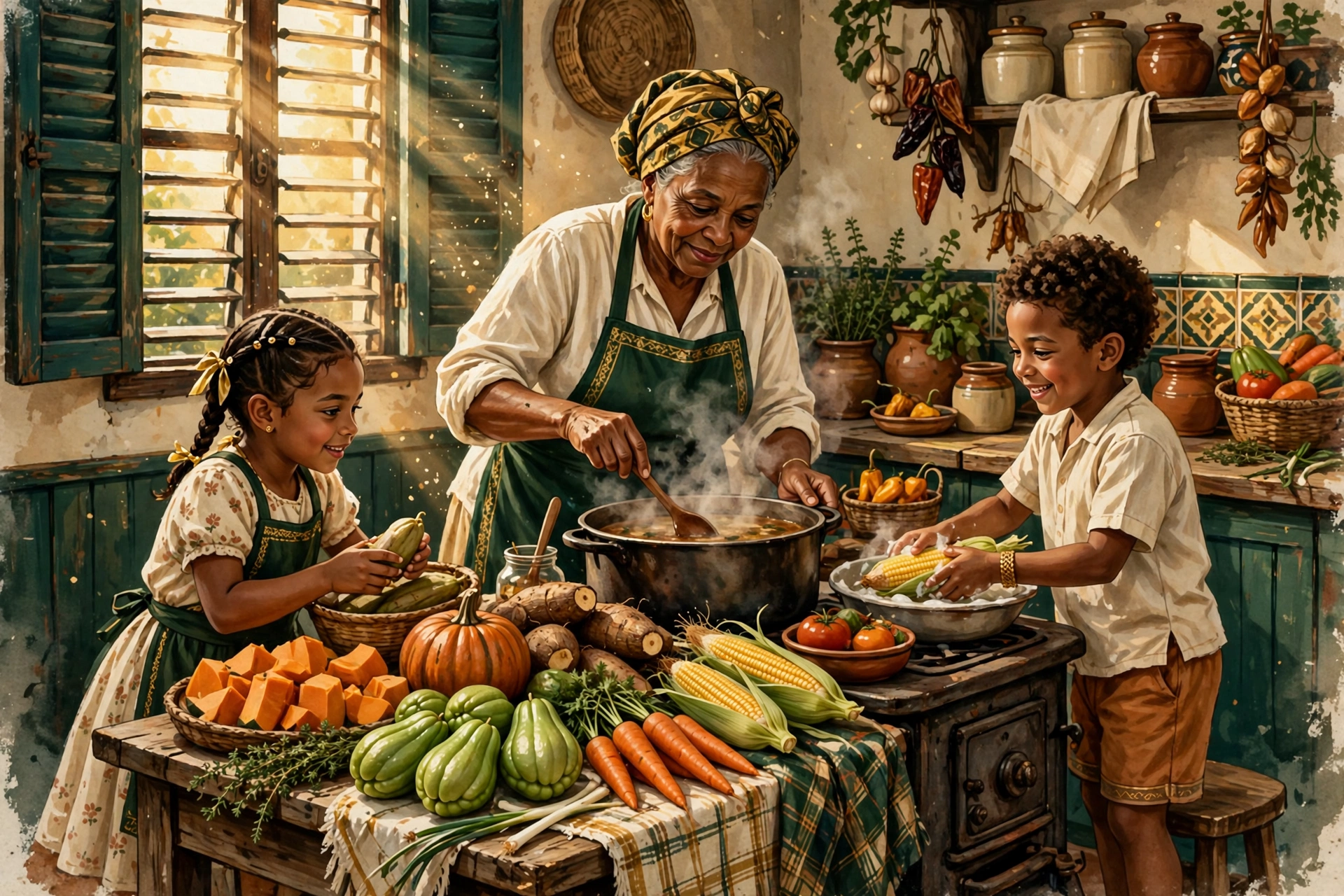
Every Caribbean childhood ran on the same clock, and it wasn't a clock at all - it was a soup pot. Saturday had a smell, a sound and a strict order of operations, and woe betide the child who tried to rearrange it. If you grew up back home, you already know how Saturday went. Let's see if your house ran it the same way.
Tap the flame if this one made you smile, think or feel proud.
First: the soup goes on
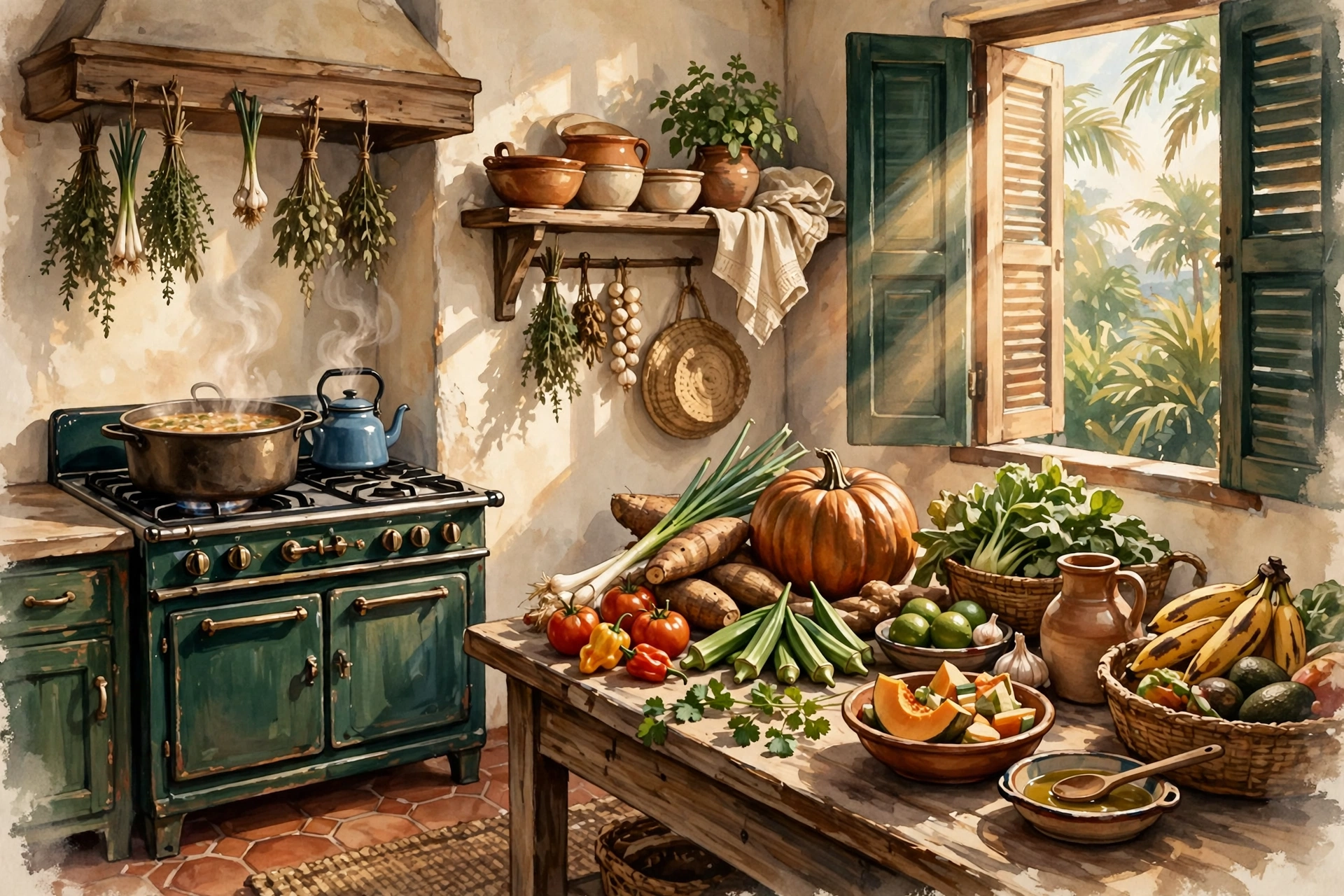
Saturday did not begin when you woke up. It began when the pot went on. By mid-morning the kitchen was already warm and the whole house smelled of pumpkin, thyme and Scotch bonnet - the whole pepper, floating on top like a warning nobody was allowed to burst. Into the pot went whatever the week had provided: yellow yam, cho cho, corn cut into rounds, carrots, potatoes, and little hand-rolled dumplings - spinners - dropped in one by one. Some houses swore by chicken foot, some by beef, some by red peas, and every family was quietly certain theirs was the correct version.
The soup was never rushed and never, ever ready when you first asked. "It soon come" covered anything from twenty minutes to two hours. When it finally landed, it came in a bowl big enough to be a commitment, with strict instructions to eat all of it - and the unshakeable family belief that soup could fix anything from a cold to a broken heart.
Market morning
Before the soup, there was the shopping - and children were the transport department. Saturday morning meant the market or the shops, a list written on a scrap of paper or, more dangerously, held entirely in your grandmother's head, and bags that got heavier with every stop. You learned young how to pick a yam that wasn't stringy, how to thump a melon and look like you knew what the sound meant, and how to stand respectfully while the grown-ups conducted serious negotiations with the higglers and vendors they had known for thirty years.
If you were lucky, there was a small treat somewhere in those bags - a bun and cheese, a gizzada, a bag of tamarind balls - payment for services rendered. If you were unlucky, you got sent back. Alone. Because somebody had forgotten the thyme.
Chores before play - no exceptions
The law of Saturday was simple and it was carved in stone: work first, play after. The yard had to be swept - not glanced at, swept, including the corners nobody could see. Floors were washed, verandas scrubbed, shoes lined up for polishing, and in many houses the good silverware and the "special occasion" glasses got their weekly inspection whether or not any occasion was coming.
Every child tried to negotiate. Every child lost. The inspection was thorough, the standard was "company is coming" even when no company existed, and the reward - freedom, finally, sometime in the afternoon - felt like a release from national service. Then you played like you'd been let out of something, because you had.
The Saturday rules, as every child knew them
1. The soup pot goes on before anything else happens.
2. You do not burst the pepper. Ever.
3. Chores first. Play is earned, not given.
4. If you go to the market, you will be sent back for something.
5. Hair, shoes and Sunday clothes are Saturday night business.
6. Grandmother's word is final - appeals are heard never.
The radio was the soundtrack
All of it happened to music. The radio lived in the kitchen or the veranda and it was on from morning - the old songs, the gospel programmes, the announcers whose voices became part of the furniture of childhood. Somebody was always singing along while they worked; somebody else was always shouting at the cricket commentary or dancing a small, private dance with a broom as a partner. Music wasn't entertainment on a Saturday. It was the weather.
Then came Sunday, so Saturday night was spoken for
Just when you thought the day was yours, Saturday turned its eyes to Sunday. Church clothes were pressed and laid out like uniforms. Shoes were polished to a shine you could check your teeth in. Hair was washed, greased, braided, twisted or pressed under a hot comb while you sat between somebody's knees trying not to move - because moving made it worse. The Sunday best didn't just appear on Sunday morning. It was manufactured, lovingly and with much complaint, on Saturday night.
And through it all, grandmother's rules held the whole operation together: waste nothing, greet your elders, keep your clothes clean, and if you have nothing to do, find something - because idle hands would be given work. It felt strict at the time. Looking back, it looks a lot like love with a schedule.
Your turn: what did your Saturdays smell like?
Every island - and every house - had its own version. Maybe your soup was fish tea or goat water. Maybe Saturday meant the beach after the chores, or cricket in the road until the light went. Maybe your grandmother's rules were stricter than all of these combined, which, frankly, is very likely.
So tell us: what is the one Saturday ritual from your childhood that you can still smell, hear or taste right now? Share your Saturday memories with us on Caribbean & Proud on Facebook Email us: caribbeanproud@outlook.com - the best ones will warm our hearts like a bowl of soup.
Sources
This is an evergreen nostalgia piece drawn from the shared, everyday culture of Caribbean family life - Saturday soup, market mornings and Sunday-best preparation are traditions recognised across the islands rather than claims tied to a single source. If your family's version differs, that isn't an error - that's the Caribbean.
More Caribbean Memories · Back to the homepage
Loading comments…