Diaspora Diaries
The Barrel From Foreign: A Love Letter to the Diaspora Care Package
It is big, it is blue, and for generations of Caribbean families it has carried more than clothes and tinned food. The barrel from foreign - packed with love abroad, shipped slowly across the sea, opened like treasure at home - might be the most honest love letter the diaspora ever writes.
Tap the flame if this one made you smile, think or feel proud.
What exactly is a barrel from foreign?
If you grew up in the Caribbean, you already know. If you grew up abroad, you have probably packed one. The barrel from foreign is a big blue plastic shipping barrel, packed tight by family overseas - in London, New York, Toronto, Miami, wherever Caribbean people have built new lives - and sent home by ship to the family waiting on the island.
It is not posted. It is not couriered in two days. It travels slowly, the way love sometimes has to: filled over weeks or months, sealed, collected, loaded onto a ship, and carried across the Atlantic or down through the Caribbean Sea. By the time it arrives, half the neighbourhood knows it is coming.
What goes inside
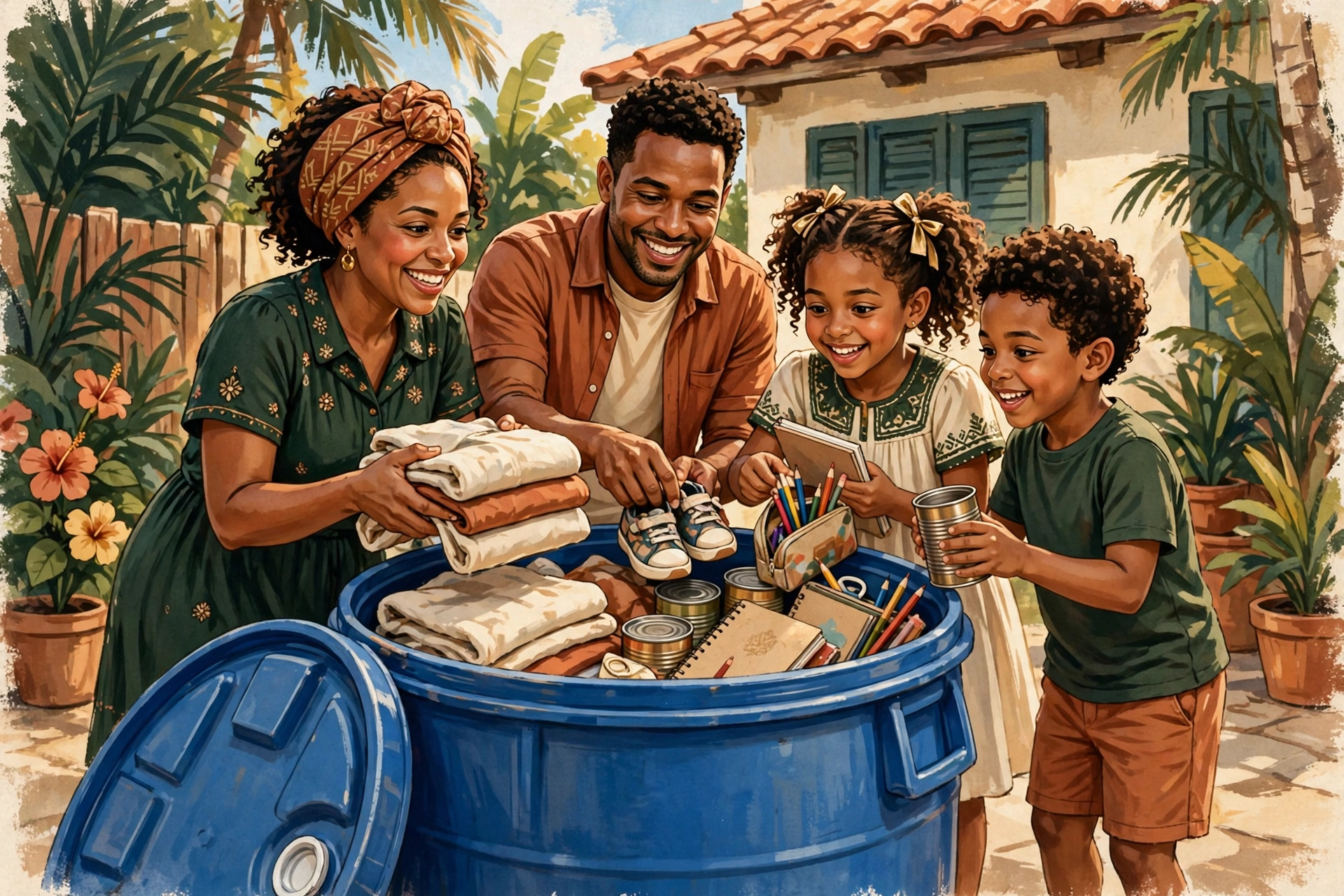
Every family has its own formula, but some things are near-universal. Clothes - for children who have grown since the last barrel, for aunties, for church, sometimes a whole suitcase worth folded into tight rolls. Shoes, especially trainers and school shoes, in sizes written down carefully from phone calls home. Toiletries by the dozen: soap, toothpaste, deodorant, lotion, the particular brands that cost too much or simply cannot be found at home.
Then the food. Tinned goods that survive the journey - corned beef, sardines, baked beans, hot dogs in brine - alongside rice, flour, sugar, tea, coffee, biscuits and sweets for the children. School supplies arrive in season: exercise books, pens, pencils, backpacks, a calculator for the one doing exams. And there is almost always something unexpected tucked into a corner: a perfume, a watch, a football shirt, a photograph, a letter.
Nothing in a barrel is random. Every item is an answer to a conversation - a size asked for, a need mentioned in passing, a treat remembered from a visit years ago. To read a barrel's contents is to read a family's life.
Inside a classic barrel
Clothes - for the children first, then everybody else
Shoes - school shoes, trainers, church shoes
Toiletries - soap, toothpaste, lotion, the good brands from foreign
Tinned food - corned beef, sardines, beans, biscuits and sweets
School supplies - books, pens, backpacks, exam essentials
And always - one surprise nobody asked for, but everybody loves
Opening day
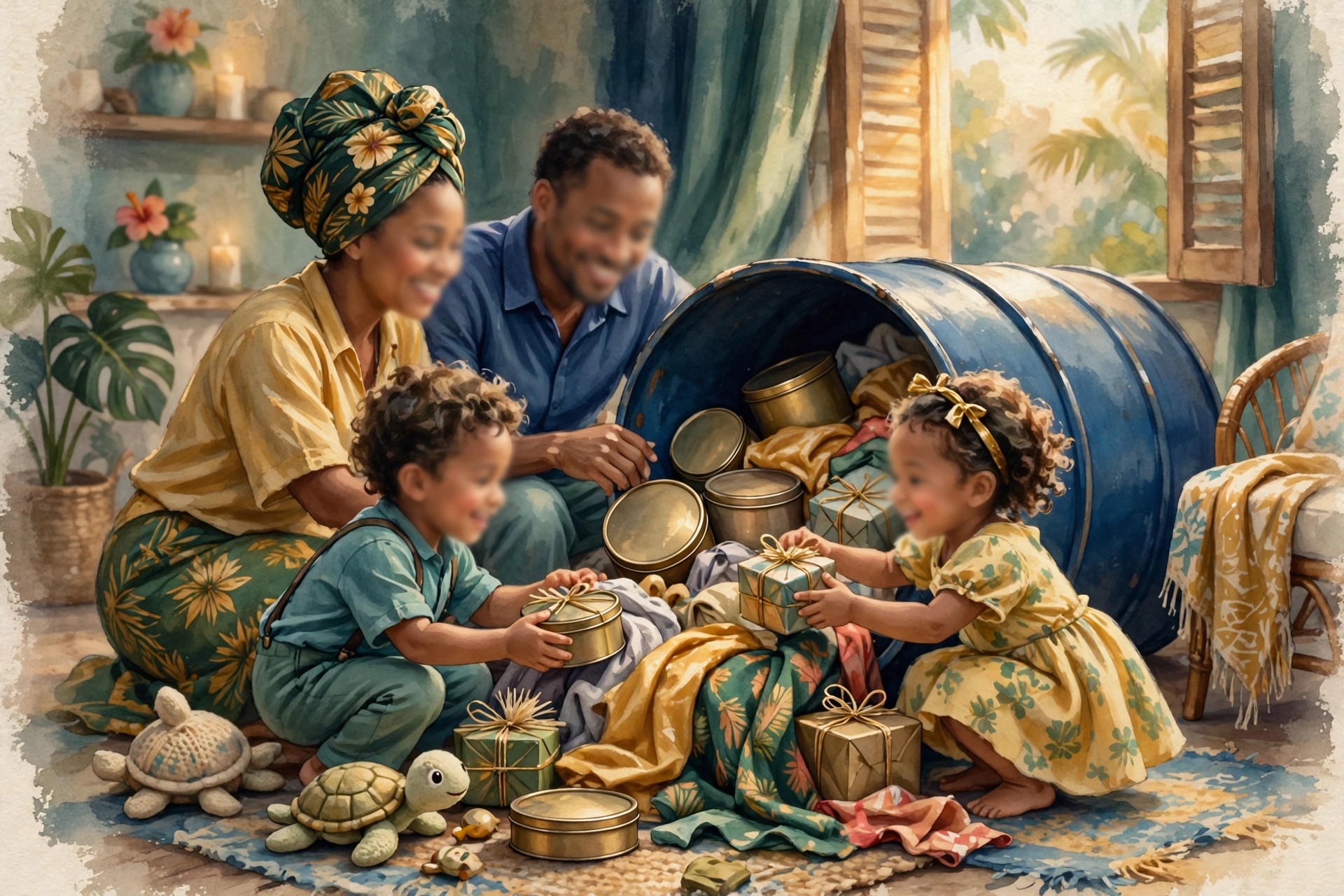
Ask anyone who received barrels as a child and watch their face. The arrival was an event - the trip to collect it, the barrel sitting in the yard or the front room, the seal finally broken with the whole family gathered round. Hands went in one by one. Things were held up, exclaimed over, tried on in doorways. The sweets were rationed with great seriousness and no success whatsoever.
For the children, it was better than a shop. For the elders, it was something quieter: proof, in solid form, that the ones who had gone away had not forgotten the way back.
More than things
Here is what outsiders miss: a barrel is not charity, and it is not really about the goods. Most of what is inside could, with enough money, be bought at home. The barrel matters because of what it says. Somebody working long shifts in a cold country walked the aisles thinking of you. Somebody saved, and chose, and packed, and paid the shipping, month after month, year after year. The barrel is sacrifice you can hold in your hands.
It is also a thread. Migration split Caribbean families across oceans, but the barrel - along with the money sent home, the phone calls, the visits - kept the two halves of the family one family. Children grew up knowing the smell of a freshly opened barrel the way they knew their own kitchen. Relatives abroad stayed present in a home they might not see for years, one tin, one shoe, one schoolbook at a time.
These days the barrels share the journey with money-transfer apps and online shopping, and some families pack fewer than they used to. But the blue barrel has not disappeared, and neither has what it stands for. Wherever Caribbean people settle, they look back - and they send something of themselves home.
Now over to you: what was always in your barrel? The trainers in exactly your size? The special biscuits? The outfit saved for a special occasion? Tell us in the comments on Caribbean & Proud on Facebook Email us: caribbeanproud@outlook.com - we want to hear your barrel stories.
Sources
An evergreen Diaspora Diaries reflection from the Caribbean & Proud community, drawn from the shared experience of Caribbean families at home and abroad. No statistics, no hard claims - just the barrel, and everything it means. Share your own barrel memories with us on Facebook.
More Diaspora Diaries · Back to the homepage
Loading comments…